
What is happening in Bitcoin, and why it matters
News, analysis, and essays. Reported clearly and framed honestly. Educational only, never financial advice.


Bitwise Interviews 15 Institutions: Every Crypto Holder Owns Bitcoin, None Cut Its Allocation in the Drawdown
Bitwise's first institutional adoption report draws on 15 interviews with endowments, pension funds, sovereign wealth funds and family offices. Bitcoin is in every crypto portfolio, most allocations sit between 1 and 2%, and none was reduced during the roughly 50% decline. Public filings from the same months show a more mixed picture.

Fail Conventionally
Pension funds, endowments and sovereign wealth funds are moving toward bitcoin, and much of it happens out of sight. What holds them back is not doubt about the asset but the fear of being seen with it. Institutional money waits for permission, and a lot of it is waiting right now.
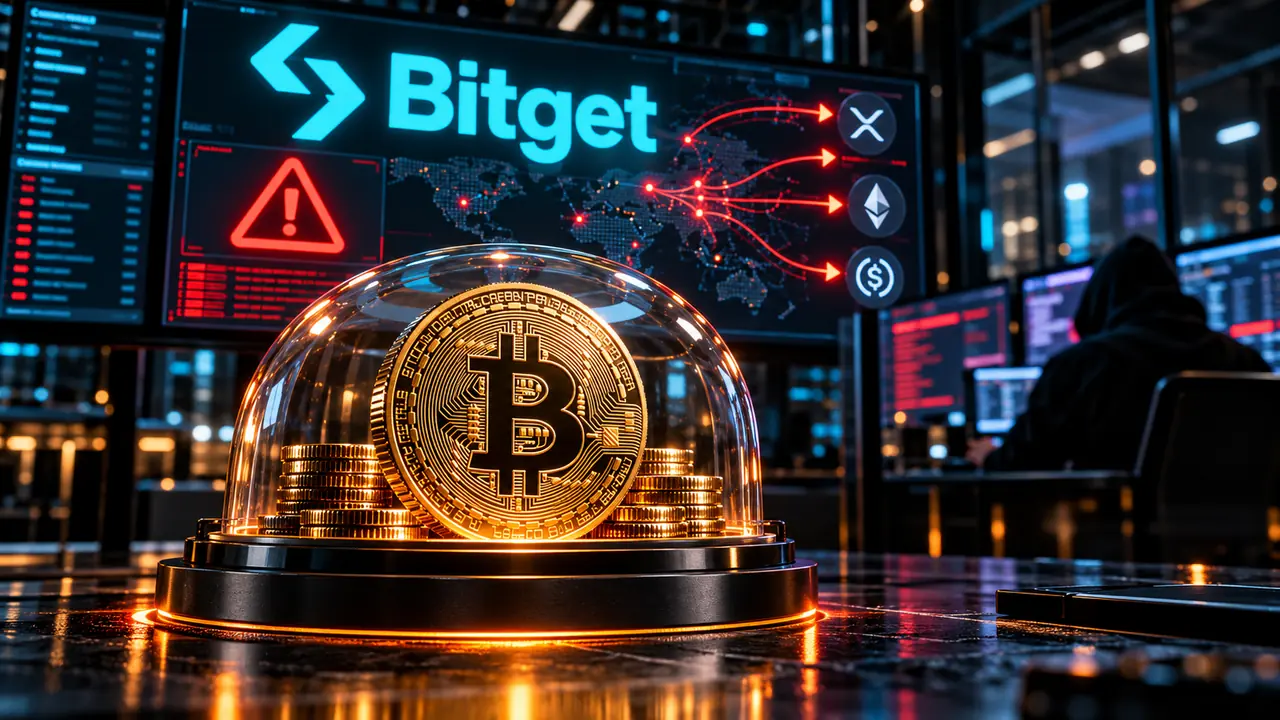
Bitget Loses 351.6 Million Dollars in Hot Wallet Breach. Its Protection Fund Holds 5,500 BTC.
Attackers moved about 351.6 million dollars in XRP, ether and stablecoins out of Bitget's hot and warm wallets on September 24. Bitget says no private keys were stolen and that its bitcoin-denominated protection fund covers the loss.
Borrowing Against Bitcoin Is a Custody Decision Before It Is a Credit Decision
Circle is the latest firm to lend against bitcoin without a sale. The models differ less in price than in who can move the collateral, and the 2025 to 2026 drawdown showed what each answer costs.

Circle Opens Bitcoin-Backed USDC Borrowing to Institutional Clients
Eligible Circle Mint customers can now deposit bitcoin, mint cirBTC and borrow USDC through the Morpho lending protocol. The product is institutional only and runs on Arc and Ethereum.

House Committee Advances Strategic Bitcoin Reserve Bill 28 to 21
The House Financial Services Committee voted 28 to 21 on September 16 to advance ARMA (H.R. 8957), which would write the Strategic Bitcoin Reserve into law. The revised text locks all federal bitcoin for 20 years but authorizes no purchases.
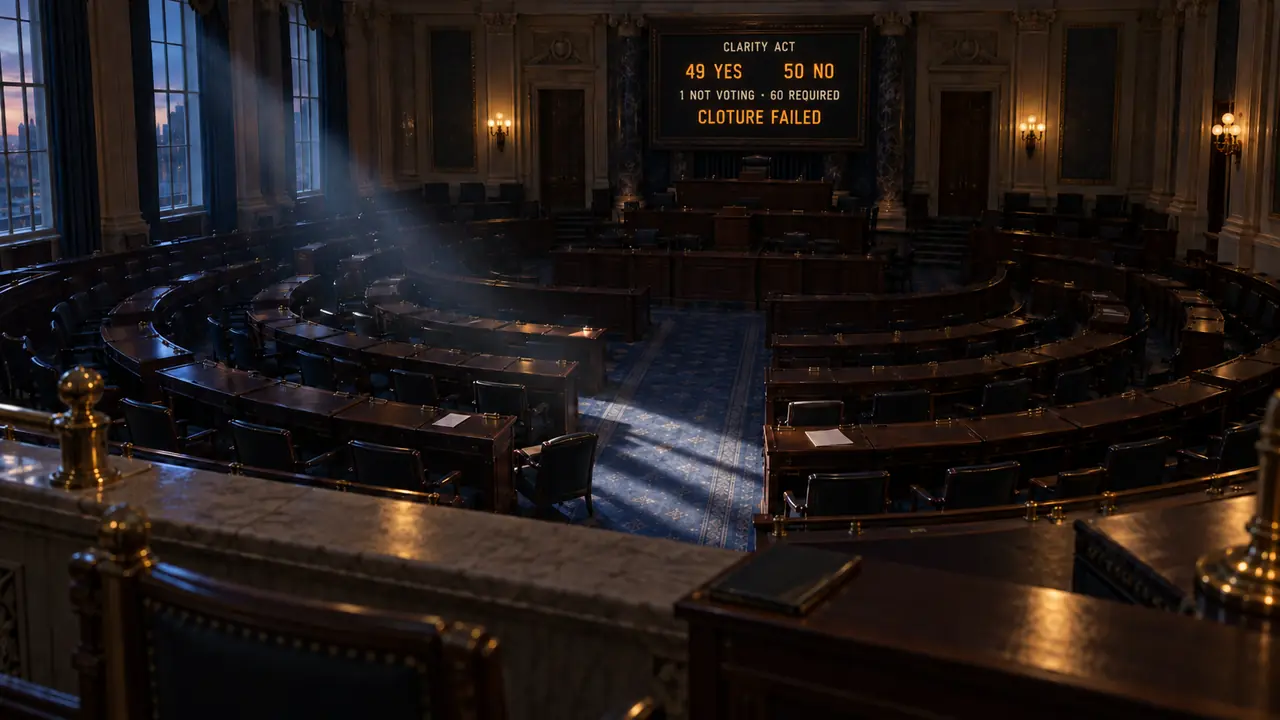
Senate Cloture Vote on the CLARITY Act Fails 49 to 50
The Senate rejected the motion to proceed to the Digital Asset Market Clarity Act on September 15. Every yes vote came from Republicans, four Republicans voted no, and one senator filed a motion to reconsider.

The CLARITY Act Failed Over Ethics and Deposits. Neither Fight Was About Bitcoin.
Forty-six senators voted no over ethics rules. Three more voted no over community bank deposits, and they said so on the record. The market priced the outcome onto exchanges, not onto Bitcoin.

The Quantum Threat to Bitcoin Is Being Measured With the Wrong Instrument
Everyone watches qubit counts. The number that has actually moved is the estimate of what an attack costs, and it has fallen by a factor of roughly 1,400 in nine years. That changes what the timeline question even means.

The Signature Is Not the System
Thirty-two years after Shor published his algorithm, the largest number ever factored with it on real hardware is 35. That is worth sitting with. So is the possibility, now peer reviewed, that the number never gets much larger.

Bitcoin's Network Effect Is Measurable. The Number Everyone Quotes Is Not.
Fifty years of research say networks gain value faster than they gain members. Nobody agrees on how much faster. We ran the regression on sixteen years of Bitcoin data and got an exponent that moves between 1.69 and 3.23 depending on where you start counting.

Nobody Was Watching. That Is Why It Worked.
A network effect is usually described as an advantage. For Bitcoin it was first a vulnerability, and surviving that vulnerability is the one thing no later project has been able to repeat. Which is why the interesting question is not who owns Bitcoin, but who cannot be counted.

The Bitcoin Power Law Went Peer-Reviewed. The Corridor Everyone Quotes Did Not
A physics-style model of Bitcoin's price passed peer review in June. Its famous growth corridor was drawn separately in 2019, and the same model priced in gold is off by a factor of four.

The Clock No One Owns
For all of history, whoever kept the clock kept the record, and whoever kept the record could rewrite it. Bitcoin moves that power from a trusted party to physics. That, more than the coin, is what block height really counts.

Wind-Powered Mining Pays Only When It Stops Being About Curtailment
The Irish study's headline is a 32 percent revenue lift. One layer down, the clean curtailment-only model is the one that does not pay, and the property that makes mining useful to the grid is the same property that empties its hardware. The resolution is not bigger rigs. It is cheaper ones.

Irish Study Models Bitcoin Mining as Supply-Side Flexibility for Wind Farms
A Technological University of the Shannon study pairs a 100 megawatt Irish wind farm with Bitcoin mining and finds a 20 megawatt rig can absorb 83 percent of otherwise-curtailed power. Only flexible operating models turn a profit, and returns hinge on the Bitcoin price outrunning network hashrate.

Why AI Threatens Bitcoin's Software but Not Its Security Model
The Red Team's scan is not a Bitcoin crisis. It is a forced audit of the software layer people actually touch, and a test of whether defenders can match attackers' tools and tempo.

Bitcoin Red Team Completes First Scan of the Open-Source Ecosystem, Files 7,958 Findings
The volunteer Bitcoin Red Team says its first AI-assisted pass over the public Bitcoin open-source ecosystem is done, reporting 7,958 potential findings across 501 projects, with Lightning software flagged as the worst affected.

Bitcoin Changes Only by Consensus
A failed anti-spam fork and a coming quantum-resistant address format share no code, only the question of who gets to change Bitcoin. The answer is the same in both cases, and it is why neither Wall Street nor a nine-member consortium can steer the protocol. An argument, not a forecast.

Impatience Is a Monetary Policy
Patience is not a character trait a society summons on command. It is a response to incentives, and the deepest incentive is the money itself. A money that loses value teaches everyone to reach for now. A money that holds its value rewards those who can wait.

The GENIUS Act Made the Dollar Programmable. That Is Why It Matters for Bitcoin
A new US law lets private companies issue dollar tokens backed by cash and Treasuries. It exports the dollar and deepens it into US debt. Bitcoin gains from the contrast, not from doing the same thing.

The Fee Is the Filter
Every few years, someone proposes to defend Bitcoin from 'spam' with a new consensus rule. The argument here: the network already has the only filter it needs, priced into every block, and banning data by rule relocates the problem rather than removing it. An argument, not a forecast.

BIP-110 Explained: What a Contested Soft Fork Reveals About Bitcoin Consensus
BIP-110 wants to restrict data storage on Bitcoin through new consensus rules, with almost no miner support and a low activation threshold. A structural read of the split risk, the economics, and where this analysis would break. Not a forecast.

BIP-110 Nears Mandatory Signaling With Minimal Miner Support
BIP-110's mandatory signaling window is expected to open around August 9. Miner support has stayed in the low single digits, far below the 55 percent threshold, and a reproducible bug has been reported in the activation client.

Coldcard Firmware Flaw Linked to Theft of More Than 1,000 Bitcoin
Hardware wallet maker Coinkite confirmed a firmware bug that weakened seed generation on several Coldcard models. Roughly 594 Bitcoin were swept from about 500 wallets on July 30, and analysts now link a total of about 1,082 Bitcoin to the same pattern.

Inside the Coldcard Flaw: What Went Wrong, and Why a Weak Seed Cannot Be Patched
The Coldcard theft was not a break in Bitcoin's cryptography. It was a single build setting that quietly routed seed generation through a predictable software generator. This is how the bug reached the firmware, why it survived for years, and what it changes about the hardware wallet you trust.

Industry-Funded Study Puts US Crypto Employment at 34,000 Direct Jobs
The National Cryptocurrency Association published its Crypto at Work report on 22 July. It puts direct employment at crypto companies at 34,000 and models a further 198,000 supported jobs across the wider economy. The authors flag several modelling assumptions.
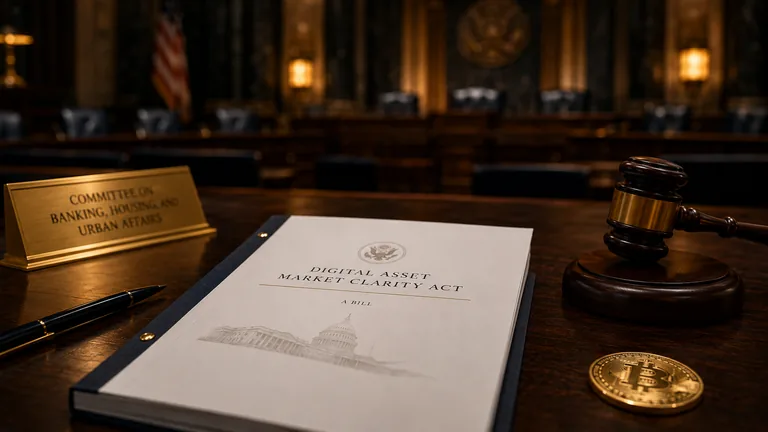
Senate Republicans Release Merged CLARITY Act Text With New Ethics Section
The 616-page draft keeps the market structure intact and adds a ban on federal officials issuing or sponsoring digital assets. Seven Senate Democrats whose votes the bill needs said the text falls short.

Who Buys Bitcoin After Strategy
Strategy has been Bitcoin's dominant buyer for years. A memo, a sale, and a market that barely flinched suggest the next buyer looks nothing like it. A structural read, not a forecast.

Bitcoin Isn't the Money You Were Promised
Almost everyone came to Bitcoin expecting to spend it. It took a different road, toward the hard reserve that ETFs, Wall Street yield products, and even dollar stablecoins are quietly being rebuilt on. Here is what Satoshi actually promised in the first block, and why this path is that promise kept, not broken.

The Medicine That Feeds the Disease
Modern monetary policy works like a painkiller. It numbs the symptom while the disease underneath keeps growing. An honest look at why each rescue needs a bigger dose, and what hard money would change.

The Last Money: Bitcoin, the Halving, and the End of Monetary Evolution
Every four years the halving cuts Bitcoin's new supply in half. This essay asks the bigger question behind that rule: could a good this scarce become the last money humanity ever needs?